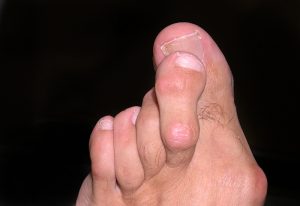
The most common cause is the result of a imbalance between the group of muscles extensors and flexors of the fingers. Therefore, the finger enters a claw-like position.
As a consequence of pressure and of continuous fret , the bone tends to hypertrophy and the skin reacts by generating a calle on the top of the toe. Depending on the degree of deformity, a callosity may also appear in the foot floor, which causes pain when walking.
The causes can be diverse:
- Can be congenital, present at birth.
- By using inappropriate shoes: short and narrow, which will contribute to the appearance of this deformity.
- Structural alterations in the foot contribute to the formation of hammer toe.
- From traumatic origin, as a sequel to trauma.
- Rheumatic diseases such as arthritis rheumatoid.
- Neurological diseases with neuromuscular disorders.
- Metabolic disorders such as diabetes.
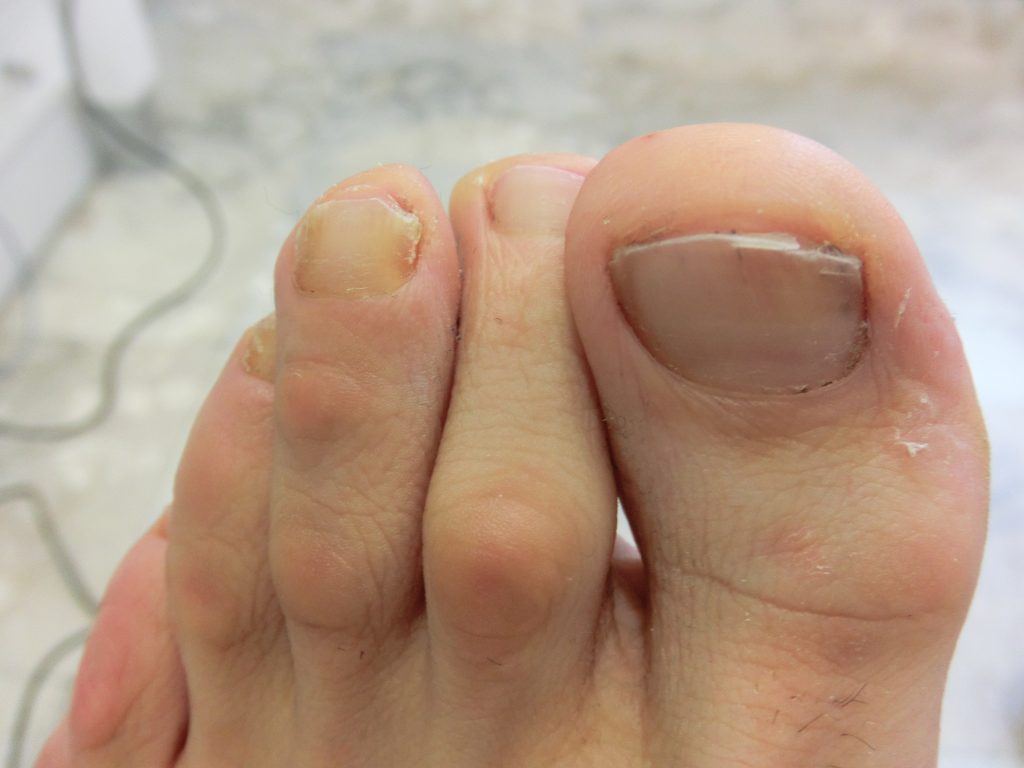
The discomfort will depend on the degree of deformation. The pain is essentially located in the interphalangeal joint protrusions. Some clinical manifestations of hammertoe can be:
- Calluses on the affected finger and in the plantar area.
- Red, swollen finger and painful touch.
- Rigidity in the finger joints.
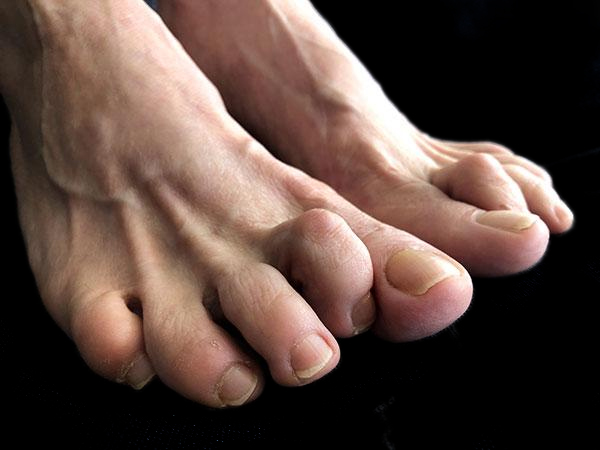
A clinical examination and a detailed history allow a diagnosis to be made. However, X-rays are very helpful in assessing the extent of the deformity and the degree of arthritis in the joint.
It depends on the age of the patient and the flexibility of the finger. Young patients with flexible fingers may choose to use a silicone ortheses to correct the deformity and avoid rubbing with footwear.
In Podomedic Centers We make custom-made silicone orthoses to protect these fingers and avoid the appearance of annoying calluses.
Severe cases require a surgical operation to straighten the deformed joint.
- Wear shoes of an appropriate size.
- Take special care with callus manipulation in pedicure salons.
- Avoid medicinal pads sold in pharmacies, as they contain acids and can cause chemical burns that can trigger ulcer formation and infections. They are totally prohibited in diabetics and in people with poor circulation. These types of patients must be treated by podiatrists.
- It is also important to carry out exercises with your fingers in order to prevent the joints from becoming stiff.