The chiropody consists of observing and eliminating alterations at the feet in order to prevent mild lesions from becoming chronic and causing more serious problems.
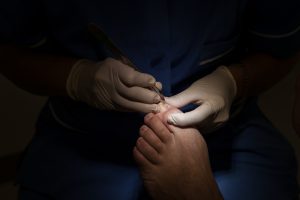
Depending on the pathologies that the patient presents, the podiatrist can perform the following operations:
- Therapeutic cutting and milling of nails.
- Delamination of hyperkeratosis or hardness.
- Treatment of Onicocriptosis or ingrown toenail.
- Treatment of hardness. or corns.
- Heel milling.
- Hydration and massage.
Some of the visits to our practice are due to the appearance of:
- Hardnesses (hyperkeratosis ).
- Ingrown and pathological nails (onicocriptosis).
- Calluses (hardness. ).
- Warts (papilloma).
- Nail mycoses and athlete's foot (fungal infection).
- Changes caused by sweat.
The hyperkeratosis is the product of a continuous and repeated mechanical trauma that generates a thickening of the outer layer of the skin. This outer layer contains a tough protective protein called keratin, hence the pathology receives the name of hyperkeratosis .
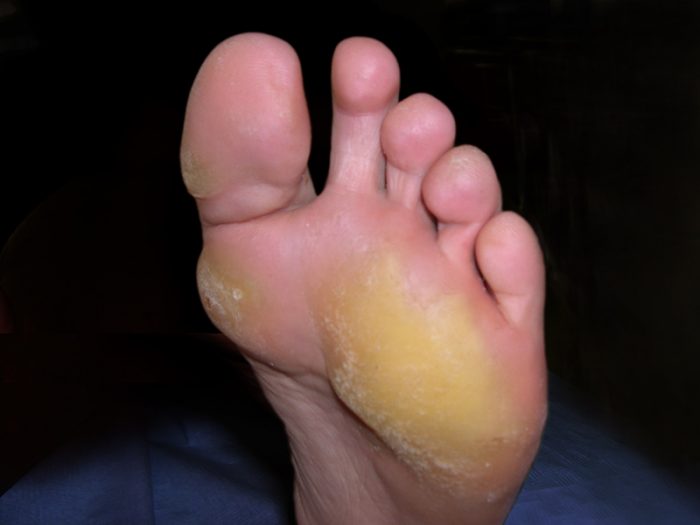
The existence of an imbalance of the dermal cells is what causes the appearance of corns (hardness. ) and hardness on the feet.
If the life cycle of cells is about 40 days and the removal of dead cells is not fast enough compared to the creation of new cells, then there is an accumulation of scaly cells that causes the skin to become more gross.
The treatment consists of delaminating the affected area to remove keratin layers and treat the causes that cause hyperkeratosis.
Corns or hardness. they are hypercheetotic lesions about the size of a pea, dark in color, growing from the deeper layers of the skin. They are generally located on a bony prominence and in areas exposed to repeated friction or pressure.
There are several types of hardness. and they are classified according to the area of the foot in which they appear.
Plantar corns: They usually appear in metatarsal areas, due to some biomechanical or structural alteration of the foot. They can be uncomfortable and cause shooting pain when walking.
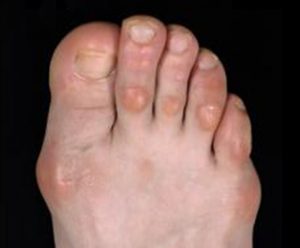
Interdigital corns: Its place of appearance is between the fingers, frequently between the 4th and 5th interdigital space. They are painful and softer in consistency than plantar. They occur due to biomechanical problems, bone problems in the phalanges or inadequate footwear.
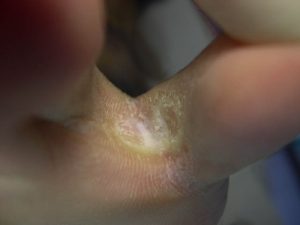
Digital corns: Appear on the back or on the pads of the fingers. They are usually caused by poor finger positioning during walking.
Periungueal corns: They are located under the nail plate, are usually painful and cause detachment of the nail. They can also appear in the nail canals as a result of an ingrown toenail.
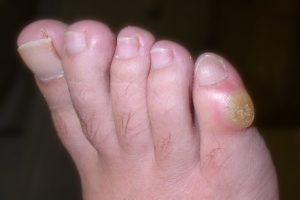
The main clinical manifestations of corns are:
- Thickening of the skin without defined edges.
- Cracking of the skin, especially on the edge of the heels.
- Loss of sensitivity in the affected area.
- Hard and dry appearance of the skin.
- Change in color of the skin, which goes from gray to yellow due to the accumulation of keratin.
There are several causes that explain the appearance of hardness. . Although, in most cases some of the following factors are usually present:
- Inappropriate footwear: Inflexible, pointed-toed footwear can cause hyper pressure on the toes and sole of the foot and lead to hardness. .
- The morphology of the foot and its alterations (bunions, claw toes, metatarsal insufficiencies, etc). It is important to perform a podiatric analysis of possible foot deformities that can cause friction and pressure with the footwear.
- Biomechanical alteration: an incorrect position of the body, an alteration in gait can cause that, when walking, more pressure is exerted on a certain area of the foot where it will end up generating an injury.
Unlike hardness, which is superficial and painless, hardness. have a dark beige color with well-defined edges covered with a callus with a hard and painful texture on direct pressure. Pain is usually circumscribed at the site of injury and is aggravated by tight shoes, pressure, and ambulation.
They are lesions that grow from the surface into the deeper layers of the skin and usually have a compact nucleus right in the center.
A chiropody to remove the callus and perform the enucleation of the heloma. This treatment is completely painless and has excellent short-term results.
In the most persistent cases, a biomechanical gait study should be carried out to determine if the patient's position is correct and to rule out that any area of the sole of the foot is receiving greater pressure. In these cases, it is recommended to make personalized orthotics in order to correct and better distribute the body's loads and thus help prevent corns and calluses.
In the digital helomas the most effective treatment is a digital silicone orthosis.
When conservative treatments fail, surgery can be considered as a remedial treatment.
- Never try to remove the hyperkeratosis on your own as you may injure yourself.
- Avoid shoes with thin or inflexible soles and a pointed toe. Wide anatomical shoes, without excessive seams and with physiological heels reduce the appearance of hardness. .
- Try to wear socks to avoid chafing.
- Avoid walking barefoot.
- Remember to hydrate your feet well and use creams if necessary.
- If in doubt, consult your podiatrist.