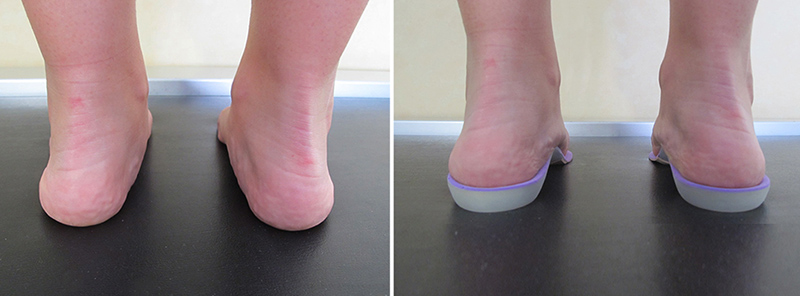
Excessive foot rotation leads to increased rotation of the tibia in the lower leg, resulting in a higher incidence of leg cramps (also called medial tibial stress syndrome), knee pain, and foot instability. .
Overpronation is also one of the possible causes of suffering injuries such as plantar fasciitis, Achilles tendinopathy, or tibial periositis.
In the physical examination we must observe the shape of the knees when they are standing. If the kneecap turns inward, it is a sign of a pronation footprint.
Observing the soles of the shoes. In overpronators, the most worn areas will be found on the inside of the heel and forefoot.

In the podoscope we will observe a footprint with a plantar arch, but the entire foot is turned inward.
One of the main causes of pronation of the foot is the presence of flat feet, which is characterized by a decrease in the plantar arch. Likewise, it may be due to hereditary or birth factors, such as congenital deformities, are also causes the distension of ligaments, poor posture, movements and execution of repetitive activities, such as running, and finally the presence of a footwear that is not suitable for the person.
It depends on the degree of pronation, the symptoms that the patient presents and the cause-effect relationship with the appearance of lesions.
The degree of pronation changes throughout the stride, but the following angles have been observed when the foot is flat on the ground:
- Angle between 1 ° and 7 ° inward: the foot position is considered neutral.
- Angle between 7 ° and 10 ° inward: the foot is in the pronation position.
- Angle greater than 10 °: the foot is strongly pronated using custom insoles in order to return the foot to a neutral position.
Perform specific exercises, such as walking barefoot or on the sand, applying physiotherapy treatments accompanied by corrective exercises.