Morton's neuroma

It is a metatarsalgia that consists of a benign and progressive thickening of the nervous tissue between the toes. It is usually caused by compression or trauma.

It is one of the most frequent painful problems in the anterior foot area. It is usually placed at the base of the nerve that passes between the third and fourth toes. It can also be found between the second and third toes. It is usually one-sided in 80% of cases.

Causes

It is a frequent pathology, especially among the female genus and may appear at any age.

Its exact etiology remains controversial; Various theories have been proposed, ranging from chronic nerve damage due to repeated traction, a vascular deficit in the nerve sheath, a compressive effect by adjacent structures, or their inflammation.

Morton's neurome is an inflammation caused by the accumulation of fibrous tissue in the external coating of nerves. The increase in fibrous tissue is a reaction to irritation from nearby bones and ligaments when they rub against the nerves.

It consists of a benign and progressive thickening of the nervous tissue between the toes.

Symptoms appear gradually when narrow footwear is used or intense activity is performed.

Pain usually increases during the course of the day, after periods of bipedation. The pain is usually intermittent and may persist at rest. Symptoms worsen when standing, walking and using narrow-pointed shoes and high heels. Inconvenience can become incapacitating. Symptoms may temporarily disappear by massaging the foot or avoiding narrow footwear or intense activities.

Initially, the diagnosis is made by observing the symptoms and with the foot scan, which allows us to reproduce the pain by compression of the foot.

Subsequently, the diagnosis is confirmed with a magnetic nuclear resonance or an ecography in which the thickening of the interdigital nerves is demonstrated. A foot radiography can also be performed to rule out bone problems .

At first the treatment should always be conservative and will evolve according to the stage of the disease. In Podomedic Centers we carry out the following methods:

  • Custom templates that reduce the pressure on the nerves and decrease the compression on walking.
  • Putting ice on the affected area which helps reduce inflammation.
  • Shoe modifications
  • Medication. Oral anti-inflammatory drugs and analgesics are prescribed in acute phases to reduce pain and inflammation.
  • Local infiltrations in the affected interdigital space and at the maximum pain point.
  • Surgical treatment when conservative treatment failed.
  • Laser Treatment to reduce inflammation of the affected area and give greater flexibility to the foot.

ic_contactoCreated with Sketch.

Do you want to request a study?
We contact you

error: Protected content.

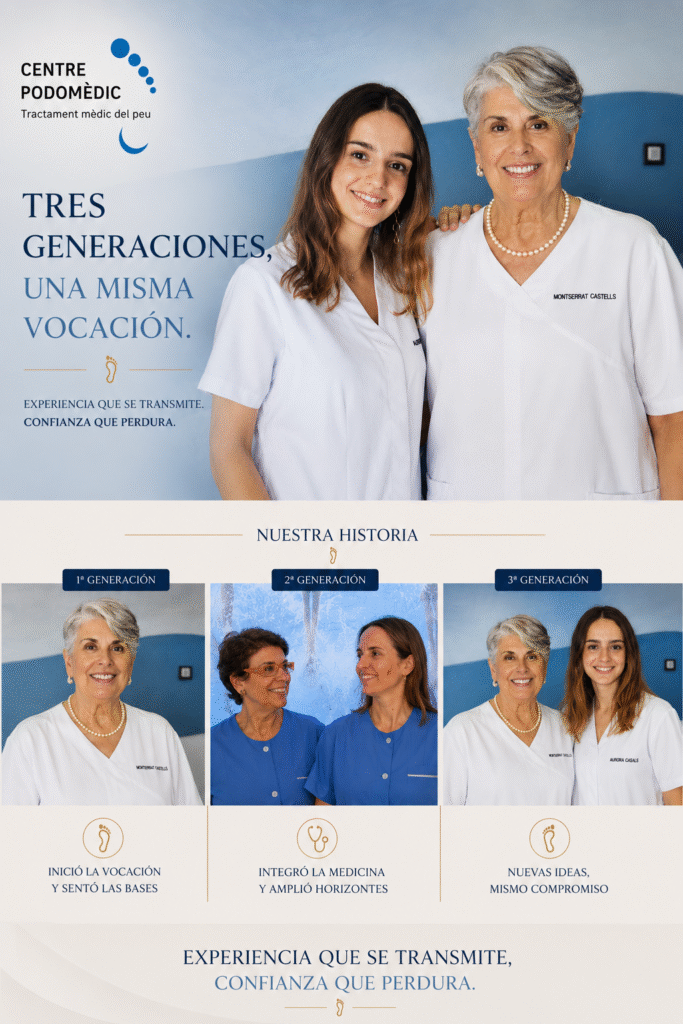
Three generations taking care of your feet

Since 1979, family tradition and advanced technology for the health of your feet.

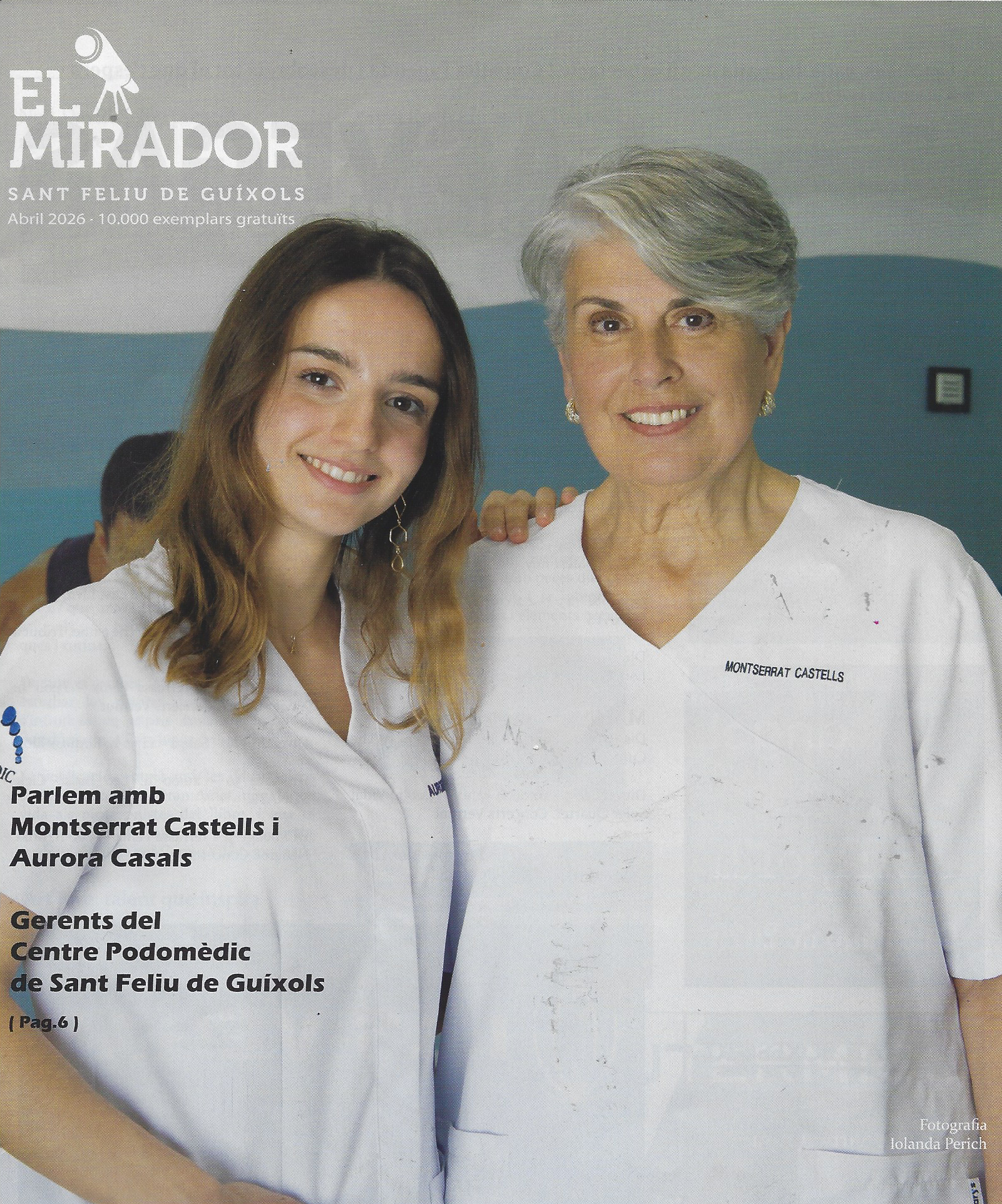
Soy Aurora Casals Lluch, Bachelor of Podiatry from the University of Barcelona and a proud representative of the third generation of my family's podiatrists.
It all started with my grandmother, Montserrat Castells Nat, passionate about knowledge and pioneer in its time. After obtaining all the diplomatures offered by the University of Barcelona, studied Podiatry (1975–1979) and in 1983 also qualified as an Orthopedic Technician. He started his career in Sant Feliu de Guíxols In 1979, in the consultation of my great -grandfather, a rural doctor of great prestige, Martí Casals.
In 1980 he opened another consultation in Barcelona, he collaborated with Dr. Ramón Vilat, worked in the US… ..

Keep reading our history