This pathology occurs especially in those people who, for various reasons, subject the sole of the foot to a prolonged overload and for a prolonged period of time. Being overweight and age are also factors to consider.
It is manifested by the appearance of a small bone spicule due to chronic inflammation in the plantar fascia at the level of its insertion with the calcaneus.
The heel spur is characterized by a stabbing pain (the sensation of stepping on a nail) that varies in intensity according to the degree of effort we make.
The pain tends to intensify in the morning when we make the first movements of the day. It yields with rest and the patient can perfectly locate the specific point of the heel where it hurts.
The diagnosis is eminently clinical. On physical examination, the patient presents with selective pressure pain. An X-ray can be ordered to confirm the diagnosis.
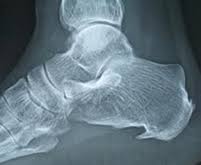
We must bear in mind that the calcaneal spur does not hurt, what really hurts is plantar fasciitis.
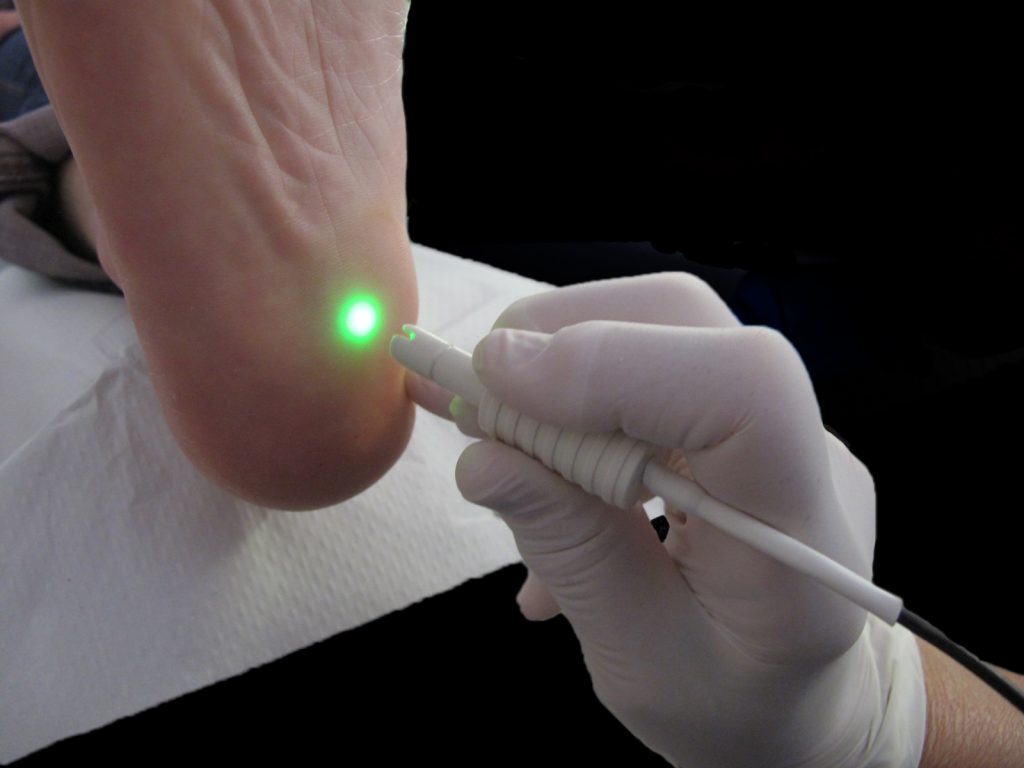
In the acute phase, heel spur treatment is aimed at relieving pain and inflammation. For this we resort to laser treatment, plus infiltration with excellent results.
In our Podomedic Centers we do hemodynamic studies of the footprint in case it is necessary to prescribe personalized templates in order not to overload the plantar fascia or other muscles or tendons in the area.
If the pain does not decrease with these measures, we recommend trying a corticosteroid injection or an infiltration with platelet-rich plasma.
When conservative treatments fail, surgery may be necessary.