What are plantar warts?
Plantar warts or papillomas are benign proliferations of the skin caused by infection with papiloviruses (HPV).
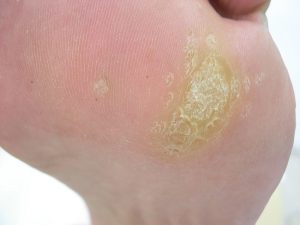
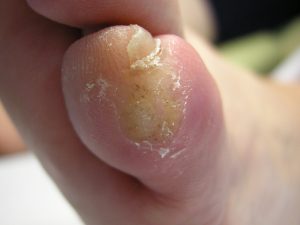
There are different types of warts, due to the great genetic variety of HPV viruses. They can be cauliflower-like or flat, white or pink, and hard or rather soft. They are usually painful when walking and in sports.
We can classify plantar warts into three types:
- The solitary or common wart. It usually increases in size and can eventually multiply, forming additional "satellite" warts.
- Mosaic wart. It is a group of small warts that grow next to each other within the same area. They are more difficult to treat than solitary warts
- Periungual warts. This type of wart is resistant to the usual therapies, since the lesion occurs under the nail folds and this prevents the HPV from contacting the therapeutic agent.
What symptoms do they present?
The signs and symptoms of a plantar wart are:
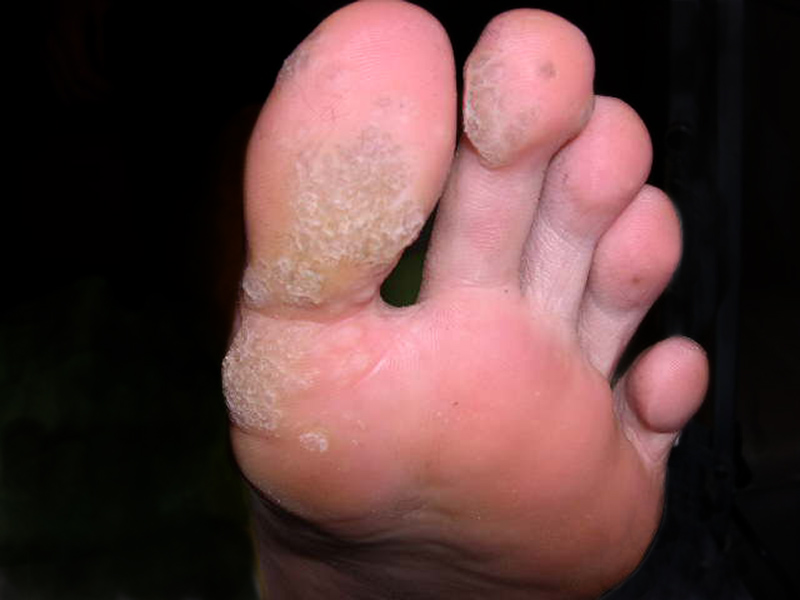
- A small skin lump (lesion) grainy and rough on the sole of the foot, usually at the base of the toes, the forefoot, or the heel.
- Hard, thickened skin (callus) over a well-defined "area" of skin where the wart has grown inward.
- Little black dots, commonly called "wart seeds."
- It's an injury that interrupts the normal lines and furrows of the skin of the foot.
- Pain and tenderness when walking or standing.
How are they prevented?
To reduce the risk of plantar warts, it is advisable to:
- Avoid direct contact with warts. This includes the warts themselves. Wash your hands after touching a wart.
- Keep your feet clean and dry. Socks and shoes must be changed every day.
- Avoid walking barefoot around swimming pools and changing rooms.
- Do not use the same nail file, pumice stone or nail clippers used on healthy skin or nails.
Virus transmission
Each person's immune system responds differently to HPV. Not everyone who comes in contact with the virus gets warts.
Which is the treatment?
There are up to 48 different procedures to treat warts. This indicates that there is no particularly effective treatment for all clinical forms of HPV infection.
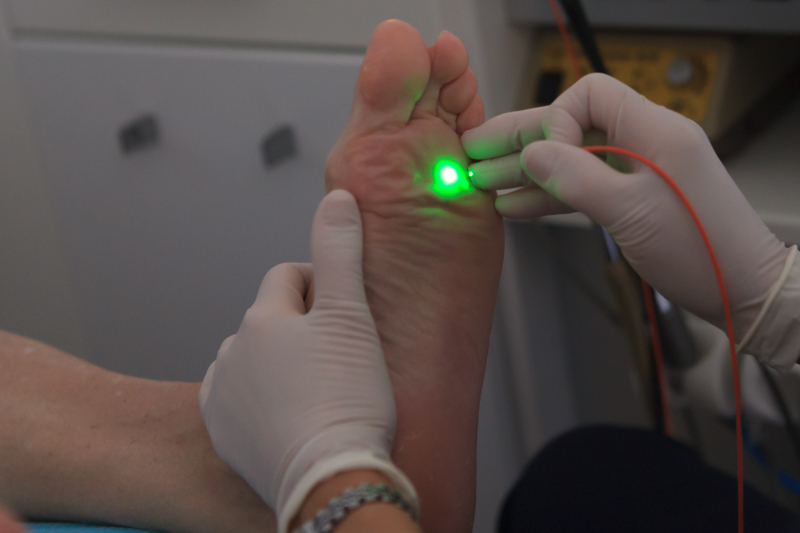
At present our Podomédic Centers have adopted the most efficient method discovered after our years of experience; the laser, as the first option for the treatment of plantar warts because it is a fast, safe and effective treatment.
How does the laser work?

The laser uses a wavelength that has the ability to penetrate deep below the skin's surface and destroy the wart-causing virus through heat.
The number of sessions required depends on the depth and location on the foot. The normal is one session every three weeks.
Sometimes, the use of adjuvant treatments is necessary to help us reinforce the use of the laser.

What is multiple puncture?
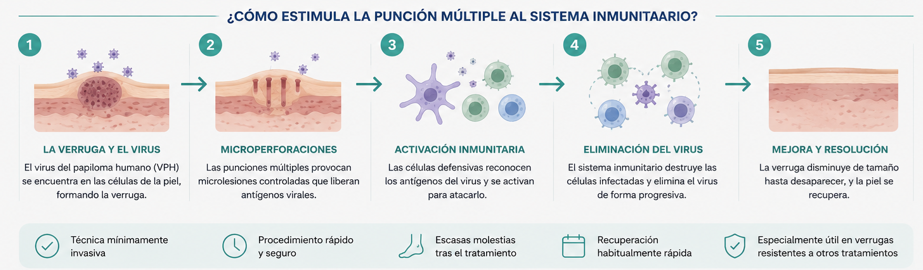
The multiple puncture It is an innovative technique that aims to activate the body's natural defenses so that the immune system itself recognizes and eliminates the virus.
The procedure consists of performing multiple controlled microperforations on the wart, generally under local anesthesia. These microperforations facilitate the contact of defensive cells with the virus and promote a more effective immune response.
Wart surgery
On rare occasions it is necessary to apply surgery for warts, however, in certain circumstances when the patient does not tolerate conventional treatment, surgery is required where local anesthesia is applied and the wart is excised. It is important to emphasize that it is not necessary to apply points for this surgery.