It is an erythematous eczema, located on the palms of the hand and the soles of the feet, whose main characteristic is the appearance of small vesicles, which are intensely itchy.
Men suffer from it more frequently than women and the highest incidence is found among young people between 20 and 40 years old, although it can also occur in children and the elderly, mainly in times of heat and humidity.
The triggering cause is unclear and can be multifactorial. An allergic component is found in 50% of patients, but other factors are also assessed, such as the role played by the sweat glands (hyperhidrosis) in skin pathologies or personal circumstances (emotional tension, stress), which are another factor of particular relevance in this disease.
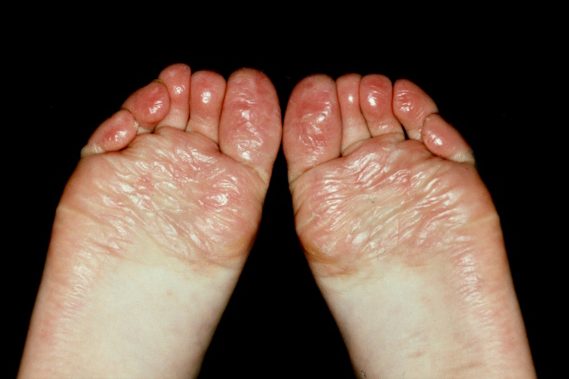
Clinically it is characterized by a sudden eruption of hard vesicles like "millet grains", which produce intense itching on the palms of the hands and soles of the feet. They occur with outbreaks lasting several weeks and their distribution is generally bilateral and symmetrical.
At first, the vesicles may be imperceptible, being palpable above the skin. The contents of the vesicles are usually light in color. The confluence of several vesicles can give rise to large blisters that evolve into dry-looking lesions. Repeated outbreaks can end up causing nail dystrophy in the affected areas, with striations, thickening and discoloration of the nails.
It is done through a good history and clinical examination. The definitive diagnosis will be given by histopathology.
Differential diagnosis. From the clinical point of view, it should be done with: palmar-plantar pustular psoriasis, ringworm of the hand and feet, blistering dermatosis, and other eczema.
The goal is to eliminate the causal effect, if known.
In the acute phase, zinc sulfate-based stimulants are recommended. Corticosteroid creams or ointments or erythromycin lotions may also be prescribed.
Rebellious cases should be associated with topical treatment with macrolide antibiotics (erythromycin) for variable periods, depending on the intensity of the outbreak.