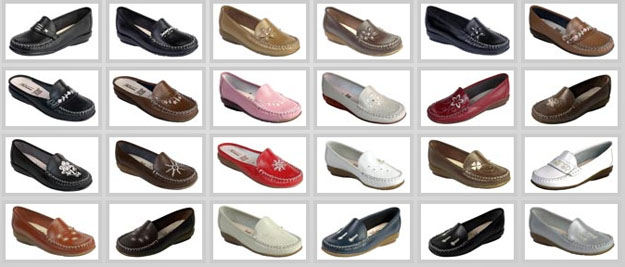
Basic steps to follow when selecting footwear:
- Know the shape, type and size of the foot.
Valgus foot: high heel width of 2 to 3 cm
Varus foot: low heel 1cm
Metatarsalgia: thick and flexible sole
Fasciitis: good arch support and heel cushioning
Morton's neuroma: front foot with wide blade - A shoe that supports the foot correctly is recommended.
- Part of the wide tip that does not compress the fingers.
- Heel that does not exceed 4 cm.
- Choose the most appropriate shoe for each activity, time of year, age, weight and sex.
- Check that the footwear adapts correctly to the foot without squeezing it, to avoid chafing and deformities.
- Walk to ensure correct adaptation.
- Shock-absorbing sole to increase comfort and distribute pressures.
- Try the shoes on both feet.
- Well finished shoe interior.
- Thermal comfort to avoid excessive sweating.
- Non-slip sole to prevent falls.
- Carry out load and check that there is distance between the tip of the foot and the shoe
- It is recommended to be made with natural materials.
- Light footwear, flexible, stable sole that facilitates foot movements.
- Buy the shoe late in the afternoon.