New technologies applied to podiatry
In a few years, it has gone from studying the foot with a mirror and from the plantar impression with ink, to using sophisticated devices.
Podiatry is the health science that aims to study diseases and disorders that affect the foot. But since its appearance as a profession in 1962, it has evolved in a vertiginous way.
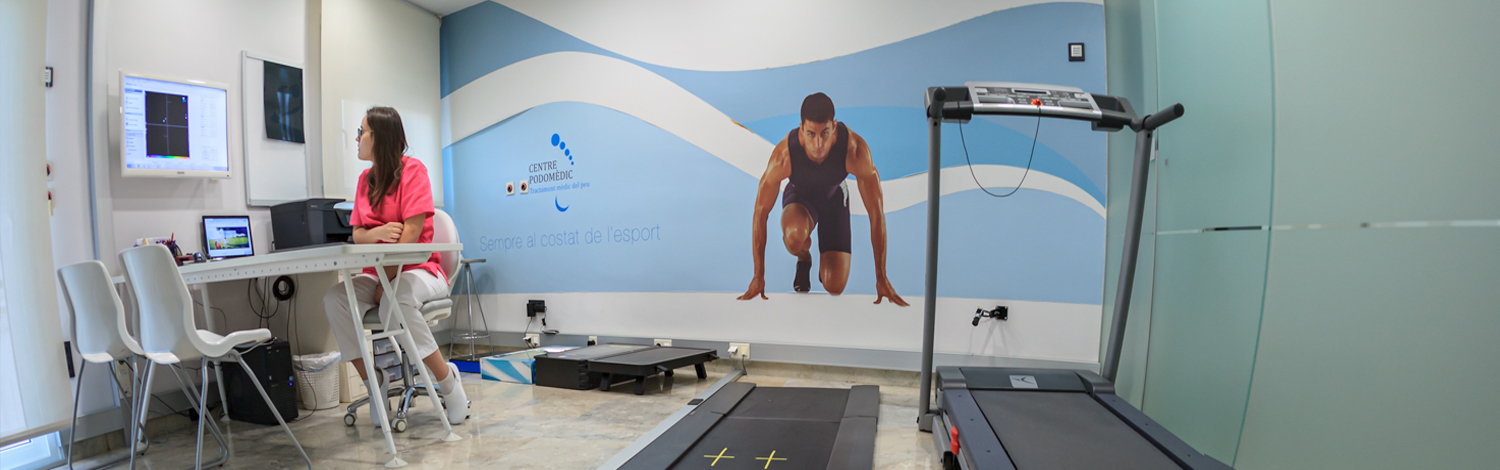
In a few years, we have gone from studying the foot with a mirror and the plantar impression with ink, to doing it with the latest technologies that allow us to prevent and/or interpret the pathology presented by the patient. For gait analysis we use platforms with sensors to measure plantar pressures both statically and dynamically and also balance (posturography).
With the use of these platforms we can know the distribution of the pressures of the plantar footprint and quantify the transmission of the loads on the feet, in addition to allowing us to automatically measure the effectiveness of the plantar supports. The use of cameras - from one to four - allows us to photograph the different planes of the body and the ranges of joint mobility, and also the video recording of the patient's dynamics, in order to measure the different angles and inclinations of the lower extremities The synchronization of the video images with the plantar pressures allows us to make an accurate diagnosis.
Thanks to the high-speed video cameras (1,200 images per second) we can assess the movements of the lower limb at a slower speed than the human eye can perceive. Another technological advance is the incorporation of the 3D scanner, thanks to which we obtain a three-dimensional footprint. This system allows us to make the insoles with state-of-the-art technology, as it sends the data from the scanner to a computerized milling machine that manufactures the plantar support.
Another field is sports podiatry. In these cases, new technological advances allow us to use sensorized insoles inside the footwear so that plantar pressures can be observed and check how the foot reacts with and without plantar support during physical activity.
We can complete this study using a sensorized treadmill. Years ago when the patient went to the podiatrist it was only to solve daily problems, usually related to nails, calluses, or because he needed to get insoles.
Fortunately, the culture of prevention has been sinking into our society and many people visit the podiatrist to learn how their feet are healthy.
The classic examination is still carried out because, apart from the technology, the clinical eye of the professional is very important when making diagnoses, but thanks to the advances in physiology and biomechanics applied to informatics, it has contributed to the emergence of new diagnostic methods, as we have explained, which allows us to provide solutions to our patients.
Access to the published article