Onychomycosis
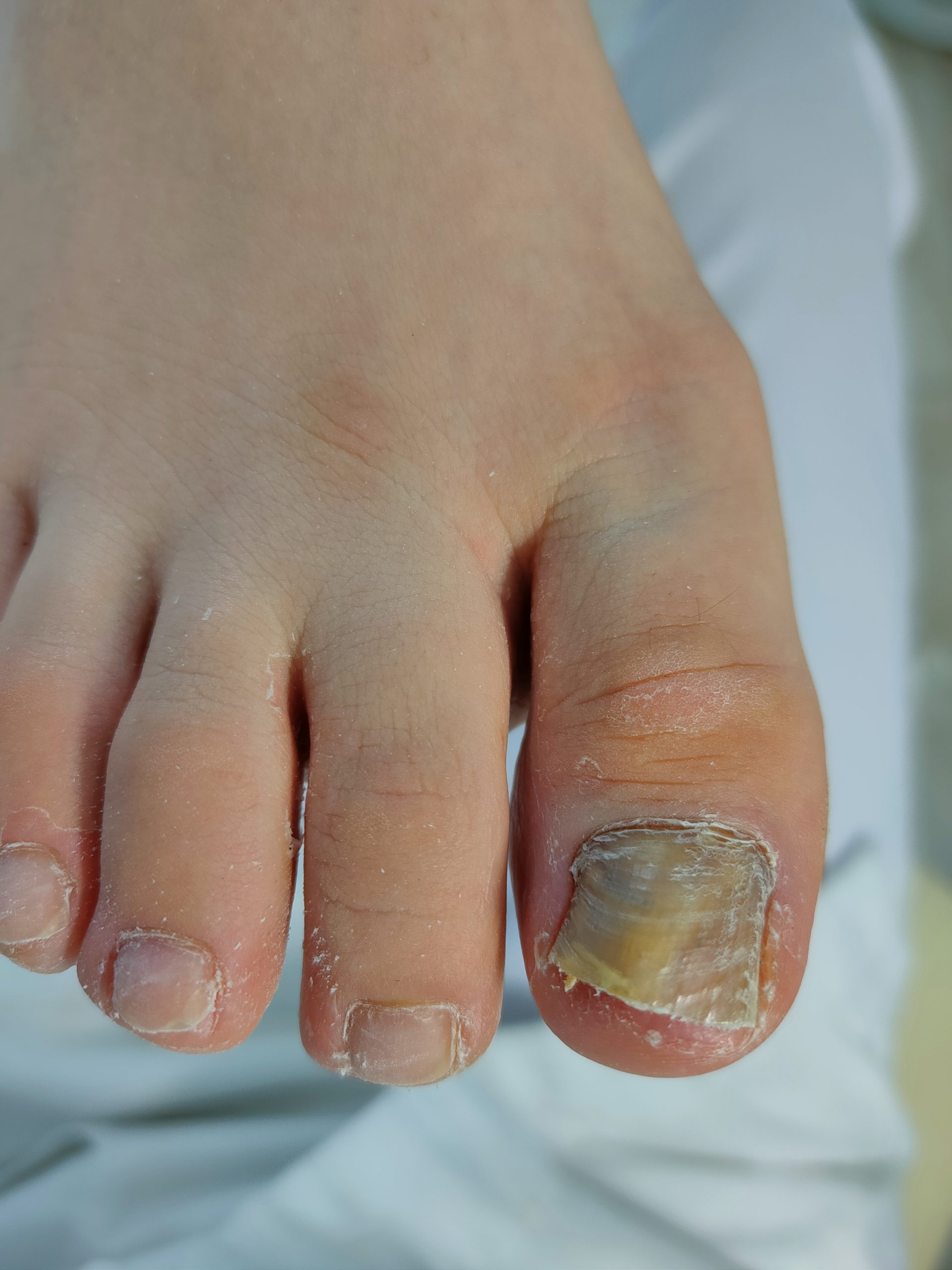
Onychomycosis is the pathology that can most frequently affect human nails. It is a nail condition caused by parasitic fungi that can affect any part of the nail: matrix, bed and nail plate.
Its incidence has increased in recent years and is mainly related to diabetic, immunosuppressed patients and especially to older people. 90% suffer from it, with a clear predominance of men over women.
Causes
The appearance of onychomycosis in 90% of cases is caused by fungi, 10% by Candida, and by non-dermatophyte filamentous fungi (mold).
As with any infection, a source of contagion is needed, and this is more common in people who frequent sports and leisure facilities, as well as in professionals who require the use of closed shoes, especially in hot and humid environments.
Symptoms
Onychomycosis of the toenails manifests itself in several ways:
- Alteration of the normal appearance of one or more nails, usually having a predilection for the nails of the big toe and those of the little finger.
- It can be associated with a chronic foot infection due to dermatophytes (athlete's foot) that can cause complete destruction of the nail.
Among the clinical manifestations we can find:
- Inflammation of the skin around the nail. It usually affects the skin at the base (cuticle) or the skin on the sides of the nail.
- Separation of the nail from the nail bed. A detachment of the nail from its bed occurs on its distal or lateral part, with persistence of the union with the nail matrix.
- Thickening of the nail with subungual peeling. This alteration in their morphology causes them to be exaggeratedly thickened, extremely hard in consistency and very elongated, and can take different shapes, claw, horn...
- Nail color change from yellowish or greenish to brown or black with the appearance of striations.
Onychomycosis is a benign process, frequently asymptomatic, although it can sometimes cause discomfort or pain, especially when cutting nails or performing physical exercises.
Prevention
Preventive treatment is the best weapon against this type of pathology.
It is similar to that proposed for athlete's feet.
Treatment
For the treatment to be successful, it is essential to identify the responsible microorganism through a mycological study and culture.
The goals of treatment are healing and clinical recovery of the nail. They tend to be long treatments lasting several months and are not always effective.
The treatment of choice is oral antifungals associated with topical preparations for several months, which is not free of side effects and interactions with other medications.