Diabetic foot
We call diabetic foot a high-risk foot, which, due to increased blood glucose, produces a vascular and neuropathic condition. The feet of these people must be treated with great care since they are susceptible to serious injuries.
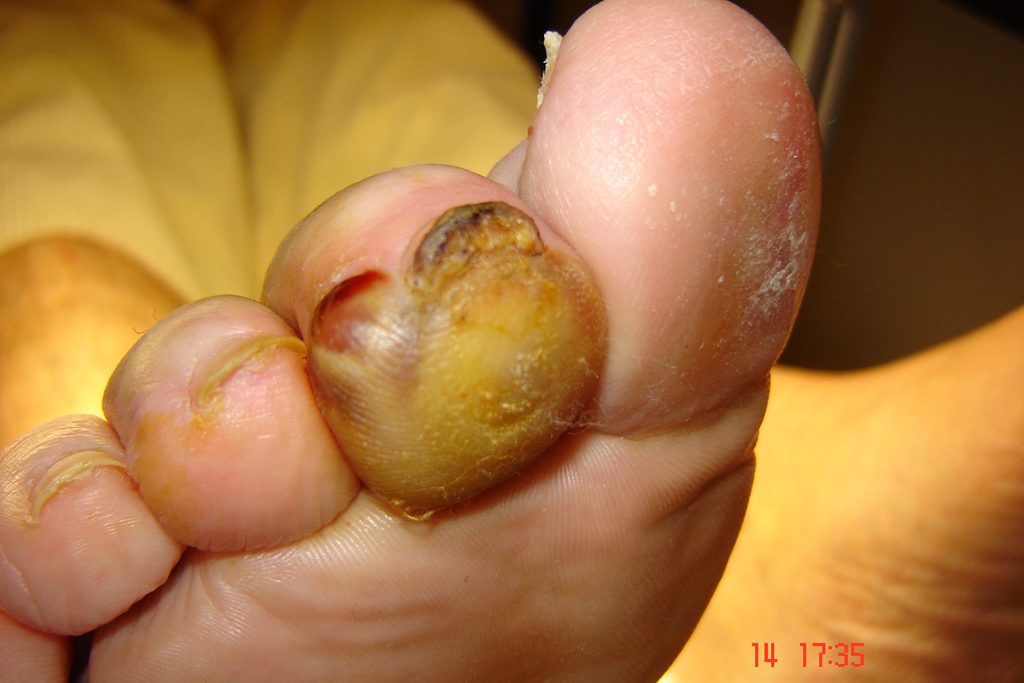
As a consequence of these two serious complications, these patients are more likely to suffer minor trauma and wounds that heal poorly, which facilitates the appearance of diabetic ulcers. It is a sore or open wound generally on the sole of the foot and is present in 15 percent of patients with diabetes. If not treated correctly they can become infected and quickly progress to gangrene and amputation. Epidemiological studies indicate that between 14 and 24 percent of patients with a diabetic foot ulcer undergo amputation. Diabetic patients have a higher risk of foot injuries. Diabetes affects the foot fundamentally in two ways:
- Causing a sensitivity deficit (neuropathy).
- Decreasing blood flow.
All diabetic patients should have their feet monitored regularly to avoid complications. At any of our clinics you can obtain a free dossier on the foot care you need.
Vasculopathy:
Diabetes affects blood vessels by narrowing their lumen and reducing blood flow. Due to this poor circulation, a vicious circle is created: as the tissues receive less oxygen and nutrients, the bones and joints weaken and flatten, creating areas of pressure that can damage the skin and cause ulcerations that defend poorly against infections.
- Cold, bluish and pale foot
- Pain in the lower extremities when walking, which decreases during rest, and you can only walk limited distances (signs of intermittent claudication)
- Leg swelling (edema)
- Trophic changes in nails and skin (plantar hyperkeratosis)
- Arterial hypertension.
Neuropathy:
The symptoms of diabetic neuropathy appear gradually as the disease progresses. It begins with an intermittent change in sensitivity in the hands and feet, which as time goes by the feet become more and more insensitive. It is important to know that in the initial phases diabetic neuropathy can sometimes be asymptomatic and be detected only by medical tests.
- Sensation of numbness, tingling, swelling, loss of sensitivity of feet and hands bilaterally.
- Pain especially at night and also with rubbing of the skin.
- Alteration of thermal sensations.
- Small cuts, ulcers or vesicles on the feet that do not hurt as much as they should and also heal very slowly.
- Muscle weakness and difficulty walking
Ulcers:
Insulin-dependent people, as well as patients suffering from kidney disease, retinopathy or diabetic heart disease, are at increased risk of developing a foot ulcer. Likewise, being overweight and the consumption of alcohol and tobacco also affect its appearance.
Therefore, high-risk people are those who:
- They suffer from neuropathy.
- You have poor circulation.
- They suffer from some type of deformation in their foot.
- Calluses. It has been shown in areas affected by calluses that plantar pressure increases by 30%, which favors the appearance of ulcers.
- Wear inappropriate shoes.
Diagnosis
In our centers we pay special attention to this type of patients, it is important to carefully monitor their evolution. It is necessary to carry out a detailed interrogation and a complete clinical examination aimed at searching for risk factors for the development of diabetic foot and its complications.
Exploration
The routine of our Podomédic Center is to carry out the following examinations on each visit:
- Foot inspection: Skin coloration, Assessment of superficial and deep sensitivity.
- Temperature control.
- Pulse assessment: Popliteus, Posterior tibial, Pedius.
- Assessment of blood supply: Oscillometry, Doppler, Pulse oximetry
- Map of plantar pressures in static and dynamic positions (through the use of pressure platforms).
Through this study we will obtain a risk index and assess the need for discharge treatments, prevention guidelines or referral to other professionals where necessary.
We advise our diabetic patients to come to our office whenever they detect any abnormality in their feet, no matter how small, and thus avoid serious complications.
Treatment
Our main objective is to prevent or delay the appearance of foot ulcers. Once developed, it is to achieve good healing as soon as possible, in order to avoid infection and thus improve the patient's quality of life.
Treatment of diabetic foot is multidisciplinary. To achieve this, we work in close collaboration with the best diabetic foot specialists.
For our part, we offer periodic individualized podiatric care for better control of the disease:
- We strictly control blood glucose
- We control adequate blood flow.
- We advise against having toxic habits (smoking, alcohol consumption...)
- We recommend exercising regularly
- We reduce friction and pressure in the affected area (calluses). A diabetic foot does not have to have calluses, since they are of maximum risk and can easily lead to the formation of a diabetic ulcer. To prevent them, we make custom orthopedic insoles with the appropriate materials for this pathology in order to prevent the appearance of calluses.
- If the patient already has an ulcer, we debride it very carefully and reduce the pressure in the lesion as much as possible. We prophylaxis the infection and treat it if it appears.
Diabetic foot care
Diabetic patients increase the risk of suffering serious complications in their feet and legs, due to loss of sensitivity and poor blood flow. Therefore, they must be fully aware that prevention is better than regret. The most important thing is good control of the blood glucose level, followed by prevention of all the problems that a diabetic foot gives rise to. To do this, it is important to first recognize the problem to seek the appropriate treatment; But we repeat, the best way to prevent diabetes complications is to take perfect care of your feet.
For better control of your diabetes, a healthy lifestyle is extremely important.
- Eat regular, low-fat, high-fiber meals like fruits and vegetables every day.
- Physical activity every day, such as walking, swimming...
- Control of blood pressure and cholesterol
- The most important thing is rigorous glycemic control.
Normal blood sugar values
| HOUR | NORMAL GLUCOSE LEVEL (mg/dl) |
| Before breakfast | 70-105 |
| Before lunch and dinner | 70-110 |
| 1 hour after meals | Under 160 |
| 2 hours after meals | Under 120 |
If you are diabetic, your numbers will try to get closer to the latter.
Below we present some basic tips for caring for your feet:
- Inspect your feet daily for blisters, erosions, or scratches. Don't forget to observe if there are injuries between the fingers. Use a mirror to look at the bottoms of your feet. Tell them to help you if you can't.
- Try to keep your feet elevated while sitting to promote blood circulation. Do not cross your legs for long periods of time
- Always wear socks in your shoes, as they help prevent chafing.
- Wash your feet daily with warm water and carefully dry the interdigital spaces. It is advisable to sprinkle them with talcum powder or cornstarch.
- Keep skin soft and smooth. To do this, it is good to apply some moisturizing or softening cream to the top and bottom of the feet, avoiding the interdigital spaces due to the risk of infection.
- Very cold or very hot temperatures should be avoided. Before bathing, check the water temperature with your hand or elbow.
- Do not keep your feet in water for prolonged periods (maximum 10 minutes).
- Heat should never be applied directly to the feet. Do not put your feet on radiators or in front of the fireplace and do not use hot water bottles or heating pads.
- Do not remove calluses or cut your nails.
- You should never use antiseptic or callicidal solutions.
- You should never walk barefoot. It is advisable to protect yourself with sneakers when walking on beaches, swimming pools and sports facilities.
- Wear socks or tights that fit perfectly and do not wrinkle. Do not wear garters, stockings or socks that put pressure on the leg. Avoid patched stockings in the foot area and socks with thick seams. Change socks daily.
- Wear perfectly adapted and flexible shoes. Shoes should not be pointed or open in the toe area. Before putting on your shoes you must inspect that their interior is in perfect condition.
- It is advisable to buy shoes in the afternoon, since the feet are more swollen than in the morning.
- Go to the podiatrist regularly, or in case of the appearance of calluses, ingrown toenails or any abnormality.
- Control your diabetes and do not smoke or drink alcohol.